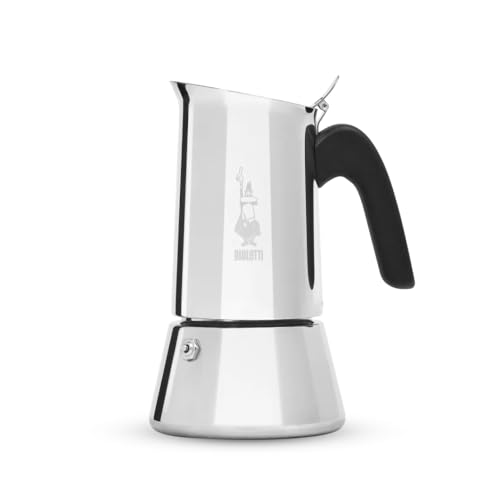
If you want a short, strong cup at home without spending espresso-machine money, the two names that come up again and again are the Bialetti Moka Express and the AeroPress. They cost roughly the same, both sit happily in a cupboard, and both make coffee that is a lot more interesting than a jar of instant. They are not the same kind of coffee, though, and the right pick depends on what you actually drink and what your hob is like.
 Bialetti Moka Express |
 AeroPress Original |
Quick verdict
Buy the Bialetti Moka Express if you want a bold, rich, slightly bitter-edged cup for milky drinks or to sip short, you have a gas, electric or ceramic hob, and you like a hands-off brew you can leave on the stove.
Buy the AeroPress if you want one brewer that can do strong and clean, short and long, hot or cold, if you are on induction and do not want a special pot, or if you travel and want something nearly unbreakable.
Side-by-side
| Bialetti Moka Express | AeroPress Original | |
|---|---|---|
| How it brews | Steam pressure pushes water up through the grounds on the hob | You steep, then press water through a paper filter by hand |
| Cup style | Thick, intense, close to espresso in feel but not true espresso | Clean and sweet; can be brewed concentrated or diluted |
| Heat source | Hob (classic aluminium version does not work on induction) | Kettle; works anywhere you can boil water |
| Typical brew time | About 4–6 minutes on the hob | About 2 minutes once the kettle has boiled |
| Grind | Medium-fine | Fine to medium, flexible |
| Filters | None; reusable metal basket | Paper filters (a metal disc is an optional extra) |
| Material | Aluminium | Durable plastic |
| Clean-up | Rinse with hot water; avoid the dishwasher | Push the puck into the bin and rinse |
Taste: what each one is actually good at
A moka pot makes a dense, heavy-bodied coffee with a bit of bite. It is the classic base for a stovetop latte or a cappuccino-style drink with frothed milk, and plenty of people drink it short with sugar. It is not espresso: the pressure is far lower, so you get less crema and a slightly rougher texture, but it is the closest thing to that style you can make on a hob for around £30.
The AeroPress is more of a chameleon. With a paper filter it gives a clean, low-sediment cup that shows off the beans. Use more coffee and less water and you get a strong concentrate you can top up with hot water or milk; use a standard recipe and it is closer to a smooth filter coffee. It will not give you the same syrupy weight as a moka pot, but it is far more forgiving when you are learning.
Ease of use and consistency
The moka pot is simple once you have the knack, but it punishes a few common mistakes: grinding too fine, tamping the basket, or leaving it on high heat after it starts to gurgle. Any of those tends to give a bitter, burnt edge. Fill the base to just below the valve, level the coffee without pressing it down, use a medium heat and take it off as soon as it starts to sputter.
The AeroPress is easier to repeat day after day. Water temperature, dose and steep time are all in your hands, so if a cup is too bitter you simply go a bit cooler or shorter next time. A small scale like the Timemore Black Mirror Basic 2 helps with both brewers, but makes the biggest difference to the AeroPress, where small changes in dose really show.
UK hobs and induction
This is where a lot of buyers trip up. The classic aluminium Moka Express will not heat on an induction hob on its own. If you have induction, either look at a stainless-steel pot such as the Bialetti Venus Induction or go for the AeroPress, which only needs a kettle. On gas, electric coil or ceramic hobs, the Moka Express works perfectly well; on a large gas burner, keep the flame smaller than the base so the handle does not scorch.
Grind: the hidden cost
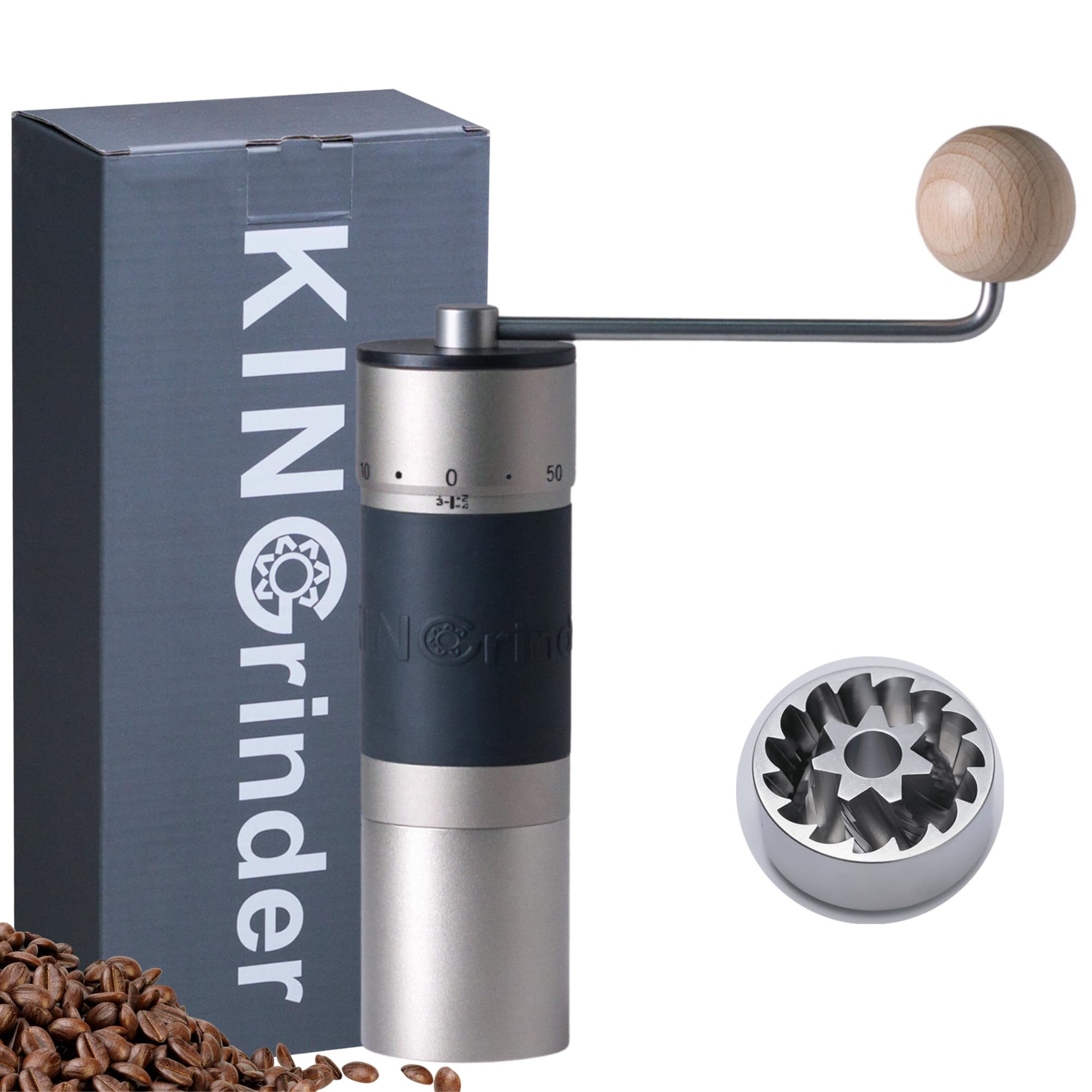
Both brewers taste noticeably better with fresh, evenly ground coffee. Supermarket pre-ground is usually fine enough to work in a moka pot, sometimes slightly too fine, and works acceptably in an AeroPress. If you want to grind your own, a hand grinder that covers medium-fine and filter settings, like the KINGrinder K6, suits either brewer, so the grinder does not lock you into one choice.
Durability and running costs
The Moka Express has no filters to buy and, looked after, will last for years; the main spare to keep in mind is the rubber gasket, which needs replacing occasionally. Do not put an aluminium pot in the dishwasher, as it dulls and pits the finish. The AeroPress needs paper filters, but a pack lasts a long time and costs very little, and the body is very hard to break, which is why it is so popular for travel and camping.
Which should you buy?
| If you… | Pick |
|---|---|
| Mostly drink milky coffee and like a strong, heavy cup | Bialetti Moka Express |
| Cook on gas, electric or ceramic and enjoy a stovetop ritual | Bialetti Moka Express |
| Have an induction hob and want to keep things simple | AeroPress Original |
| Want both strong and filter-style coffee from one brewer | AeroPress Original |
| Travel, camp or need something tough for the office | AeroPress Original |
For a bold, traditional stovetop coffee on a non-induction hob, the Bialetti Moka Express is still hard to beat for the money. For flexibility, easy cleaning and anything involving induction or travel, the AeroPress Original is the safer all-rounder. Prices on both move about, so check the current Amazon price before you buy.