Most people upgrade their coffee gear in the wrong order. They buy a nicer machine, keep the £15 blade grinder that came free with a supermarket starter kit, and wonder why espresso still tastes thin or filter still tastes bitter. The blade-versus-burr question is not snobbery — it is the single change that most often makes the next brew method worth owning. This guide is about when that upgrade actually matters, and when a blade is still fine.

What a blade grinder actually does
A blade grinder is a propeller in a cup. You press a button, the blades spin, and beans smash into fragments until you stop. There is no true grind size — only time. Ten seconds looks finer than five, but the cup still holds a mix of dust, shards and half-beans.
That mix is the problem. Fine dust over-extracts (bitterness, astringency). Large chunks under-extract (sourness, hollowness). In the same brew you get both, which is why blade-ground coffee often tastes muddy rather than clearly bad. You cannot dial in a recipe when the grind itself is random.
Blade grinders are cheap, small and fine for:
- Occasional filter or cafetière when you are not chasing clarity
- Spices, where particle uniformity barely matters
- Travel emergencies when any fresh grind beats pre-ground
They are a poor match for espresso, moka, AeroPress dialling-in, or any pour-over where you care about sweetness and clarity.
What a burr grinder changes
Burr grinders crush beans between two abrasive surfaces — usually conical or flat burrs — with a set gap. That gap is the grind size. Turn a dial (or a ring of clicks), and every bean passes the same gap. You still get a particle distribution, not identical spheres, but the spread is far tighter than blades.
That tighter spread means:
- Repeatable recipes — the same click setting tomorrow behaves like today
- Cleaner flavours — less dust fighting large chunks in the same cup
- Real dialling-in — you can move finer or coarser on purpose when a shot runs fast or slow

Manual burr grinders (hand grinders) and electric burr grinders both crush rather than smash. The motor only changes effort and speed, not the basic physics.
When the upgrade actually matters
| Brew method | Blade still OK? | Why a burr helps |
|---|---|---|
| Espresso | No | Needs a narrow fine grind; blades cannot hold a setting or stop channeling chaos |
| Moka pot | Poor | Fine-medium consistency stops bitter spit and weak watery cups |
| Pour-over (V60, etc.) | Limiting | Clarity and sweetness show up once fines and boulders shrink |
| AeroPress | Tolerant | Forgiving method, but recipes become repeatable with burrs |
| Cafetière / French press | Often fine | Coarse brew; blades are messy but drinkable if you settle and pour carefully |
| Cold brew | Usually fine | Long steep forgives uneven particles; burrs still taste cleaner |
Rule of thumb: if your next purchase is an espresso machine, a moka pot you care about, or a pour-over ritual, buy a burr grinder before you upgrade the brewer again. If you only make occasional cafetière for guests, a blade can wait.
Signs you have outgrown blades
- You own (or are about to buy) an espresso machine and shots swing wildly shot-to-shot
- Pour-overs taste sharp and dull in the same cup, and changing brew time never quite fixes it
- You follow recipes by the gram and second, but results still feel random
- You are buying nicer beans and cannot taste the difference you paid for
- You have tried “grind longer / grind shorter” on a blade and still cannot find a sweet spot
If several of those are true, the grinder — not the kettle, not the scale — is the bottleneck.
What kind of burr upgrade to consider
You do not need a café grinder. For UK home use, three sensible paths cover most people:
| Path | Suits | Trade-off |
|---|---|---|
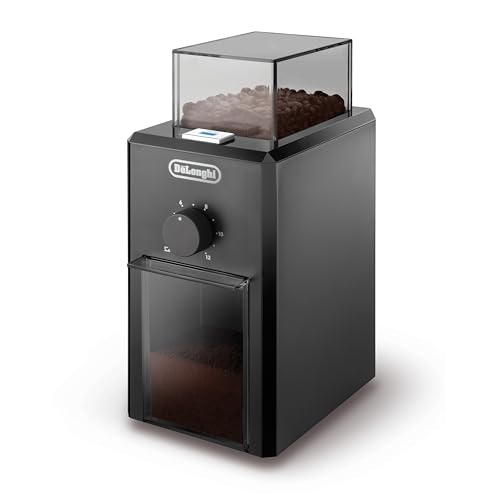
| Entry electric burr (e.g. kitchen conical like the De'Longhi KG79 class) | Filter, cafetière, coarse-to-medium daily brewing | Often weak at true espresso-fine; better than blades for clarity |
| Capable hand grinder (e.g. 1Zpresso Q2, Timemore C3, Hario Skerton) | One or two cups; travel; quiet mornings; espresso-capable models exist | Arm effort; slower for guests |
| Espresso-focused electric (e.g. Baratza Encore ESP class) | Regular espresso at home with a separate machine | Higher cost and counter space; the right spend if shots are the goal |

Match the grinder to the finest brew you actually make. A filter-only household does not need espresso-capable burrs. An espresso household will waste a good machine on anything that cannot hold a fine setting.

Myths worth ignoring
- “Blade grinders are fine if you pulse them.” Pulsing mixes the particles; it does not create a uniform size.
- “Any burr is espresso-ready.” Many cheap electric burrs top out too coarse or have huge step sizes. Check the finest setting before you buy for espresso.
- “Hand grinders are only for camping.” Modern manuals with steel conical burrs routinely beat budget electrics for one-cup quality.
- “The machine matters more than the grinder.” For espresso and pour-over, the opposite is usually true until you already own a decent burr grinder.
A practical decision checklist
- List the brews you make weekly — not the ones you aspire to on Instagram
- If espresso or moka is on that list, plan a burr grinder before another machine upgrade
- If you only do cafetière or cold brew, a blade can stay until beans or curiosity push you further
- Pick hand vs electric from lifestyle (noise, guests, counter space), not from marketing
- Budget for the grinder as part of the brew system — it is not an accessory, it is the particle engine
Blade versus burr is not a purity test. It is a timing question. Upgrade when uneven particles are blocking flavour you have already paid for in beans or equipment. Stay on blades when your brew method and standards do not punish the mess. When you do step up, even a modest burr grinder usually teaches you more about your coffee than another year of pulsing a plastic cup.