If your UK kitchen is a galley, a studio flat or a shared house with half a worktop free, a full-size barista machine is dead on arrival. Two machines keep showing up in that search: the slim DeLonghi Dedica Style EC685 and the compact Sage Bambino Plus. Both are single-boiler home espresso machines aimed at beginners who mostly drink milk drinks. They are not the same bet.
This comparison is about counter footprint, morning friction and whether you will actually learn to steam milk — not about cafe-level dual boilers.
|
|
Quick verdict
- Buy the Dedica if counter width is the hard limit, you want the lowest price into real espresso, and you are happy learning a traditional steam wand (or mostly drinking shorter espresso drinks).
- Buy the Bambino Plus if milk drinks are the point — flat whites, lattes, cappuccinos — and you want auto milk texturing plus a much faster heat-up so weekday mornings feel less like a project.
Neither includes a grinder. Budget for a separate espresso-capable grinder either way, or you will fight pressurised pods/baskets forever.
At a glance
| Feature | DeLonghi Dedica | Sage Bambino Plus |
|---|---|---|
| Footprint | Very slim (~15 cm wide) — fits awkward gaps | Compact but wider/deeper than Dedica |
| Heat-up | Thermoblock; quick for the class | Very fast (Sage ThermoJet) — often ~3 seconds to brew temp |
| Milk | Manual steam wand — technique required | Auto milk frother + manual option; beginner-friendly |
| Baskets | Pressurised baskets common out of the box | Pressurised + non-pressurised options in the box |
| Built-in grinder | No | No |
| Best for | Tightest counters, lower budget, learning wand skill | Milk-first beginners who want speed and assisted foam |
Prices move. Check the live Amazon listing before you buy.
Counter space — the real UK constraint
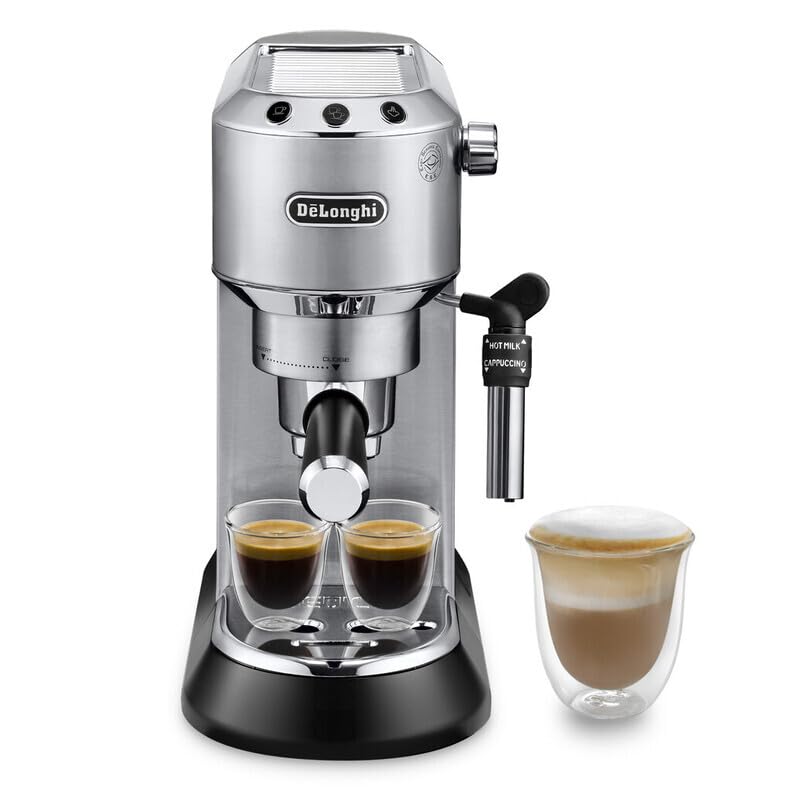
The Dedica famous selling point is width. At roughly 15 cm it slides into gaps beside a toaster that most machines cannot. Height still matters under wall cupboards, and you need room to lift the portafilter and jug, but for narrow worktops it is often the only espresso machine that physically fits.
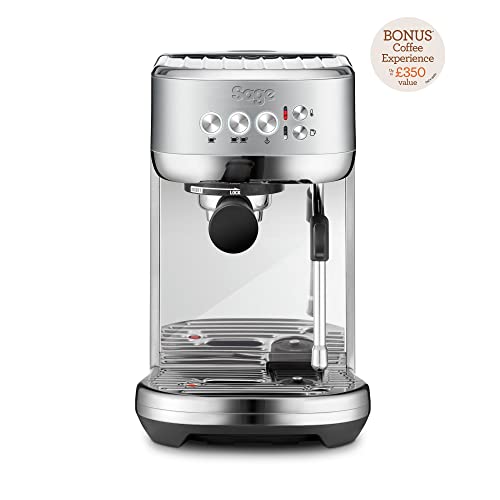
The Bambino Plus is still small-kitchen friendly compared with a Barista Express or Classic, but it asks for a proper square of counter. If you only have a slim residual strip, Dedica wins by default. If you have a clear 30–40 cm square and milk drinks dominate, do not let the Dedica skinniness talk you into the wrong workflow.
Milk drinks and steam
Dedica: a traditional-style wand. You control stretch and texture yourself. That is excellent once you have the knack, and frustrating for the first weeks of split oat milk and big bubbles. If most of your cups are flat whites, budget practice time — or accept that results will be uneven at first.
Bambino Plus: the auto milk system is why many UK beginners pick it. Drop in the jug, choose a texture/temperature style, and let the machine do the stretching. You can still use a more manual approach later, but day-one milk drinks are far less intimidating. For households that live on lattes, this is usually the stronger machine.
Neither will match a dual-boiler cafe machine for back-to-back milk volume. For one or two drinks before work, both are in the right class.
Shot quality and the grinder you still need
Both machines will happily use pressurised baskets with pre-ground coffee, and both will taste better once you move to a proper grind and (on Bambino) the non-pressurised basket when you are ready.
Plan the total system cost:
- Machine + espresso-capable grinder + beans + a jug.
- A hand grinder such as the Timemore Chestnut C3 ESP Pro is a common compact pairing when counter space is already tight.
Buying the Dedica to save money and then living on supermarket pre-ground in a pressurised basket is a false economy. The machine is only half the kit.
Daily friction: heat-up, noise, cleaning
- Heat-up: Bambino Plus is the weekday winner. ThermoJet readiness removes a lot of hovering. Dedica is still quick for a thermoblock, but Bambino feels snappier.
- Noise: both pump. Neighbours in flats will notice either; neither is whisper-quiet.
- Cleaning: wipe the wand or auto-milk path after every milk drink, empty the drip tray, and descale on a UK hard-water schedule. Bambino auto milk system adds a rinse habit; Dedica wand is simpler but you still must purge and wipe or it gums up.
Who should buy which
Choose the DeLonghi Dedica if:
- Width is the non-negotiable constraint.
- You want the cheapest credible path into home espresso.
- You are willing to learn a manual wand, or you drink more espresso/americanos than milk drinks.
Choose the Sage Bambino Plus if:
- Flat whites and lattes are most of what you make.
- You want assisted milk texturing and very fast heat-up.
- You have a small but proper patch of counter, not a 15 cm gap.
Consider something else if:
- You want a built-in grinder in one box — look at the Sage Barista Express class instead.
- You want a long upgrade path with a traditional group and separate prosumer grinder — Gaggia Classic territory, if you have the space and budget.
Check live pricing
- DeLonghi Dedica Style on Amazon UK
- Sage Bambino Plus on Amazon UK
- Timemore Chestnut C3 ESP Pro grinder (compact pairing)
Bottom line
Pick on space vs milk priority. The Dedica is the slim, lower-cost machine that fits gaps almost nothing else will — accept that milk skill is on you. The Bambino Plus is the better small-kitchen milk machine: faster to temperature, kinder on foam for beginners, still compact enough for most flats. Add a real grinder to either, or you are buying a shiny way to make mediocre pressurised shots.


