Espresso Machine Maintenance Requirements: High-Performance vs User-Friendly Design
When investing in an espresso machine, the initial purchase price tells only half the story. Understanding maintenance requirements helps you choose equipment that matches your long-term commitment to home brewing excellence.
Gaggia Classic Evo Pro: Traditional Maintenance Approach
The Gaggia Classic Evo Pro (£549, 4.3★ from 932 reviews) follows Italian espresso tradition with its brass boiler and steel portafilter construction. This robust engineering comes with straightforward maintenance needs.
Its single-boiler design requires regular descaling every 2-3 months depending on your local water hardness. The brass boiler resists corrosion naturally, whilst the lead-free brass group head can be cleaned with standard brewing protocols. Most maintenance tasks involve basic cleaning routines rather than complex procedures.
The 5-year parts warranty reflects Gaggia's confidence in component longevity, though you'll need separate grinder maintenance alongside this machine.
Best for: Coffee enthusiasts who appreciate mechanical simplicity and don't mind traditional maintenance routines. Ideal if you already own a quality grinder and prefer maintaining separate components.
Sage Barista Express: Integrated Complexity
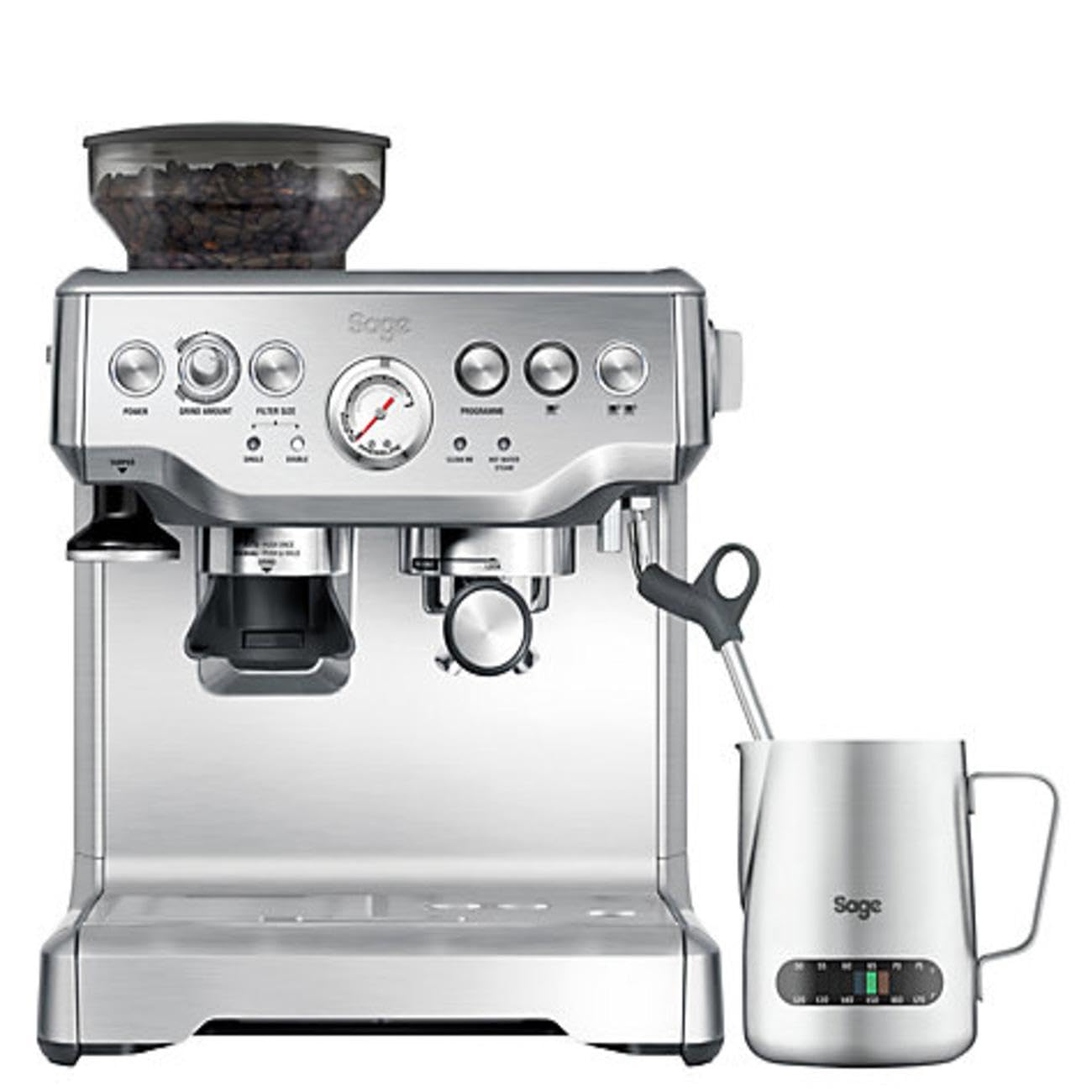
The Sage Barista Express (£499, 4.6★ from 2536 reviews) combines espresso brewing with an integrated burr grinder, creating more maintenance touchpoints but streamlined daily workflows.
Beyond standard descaling, you'll maintain the integrated grinder mechanism, including burr cleaning and calibration checks. The 16 grind settings require occasional adjustment, whilst the precision temperature system needs regular sensor cleaning. However, Sage's user-friendly design includes maintenance alerts and simplified cleaning cycles.
The steam wand requires daily purging and weekly deep cleaning, similar to most espresso machines, but the low-pressure pre-infusion system adds another component requiring attention.
Best for: Home baristas who value convenience over simplicity and prefer maintaining one integrated system rather than multiple separate components.
The Maintenance Reality
Both machines require commitment, but in different ways. The Gaggia demands traditional espresso machine care with fewer variables to manage. The Sage requires more diverse maintenance tasks but provides guidance through the process.
Consider your local water quality, daily usage patterns, and comfort level with equipment maintenance when choosing between these approaches.
Verdict
For long-term reliability with minimal complexity, the Gaggia Classic Evo Pro wins on maintenance simplicity. Its traditional engineering means fewer systems to maintain, making it ideal for users who prefer straightforward care routines over integrated convenience.