
Most people's first V60 goes one of two ways. Either it tastes like hot brown water, or it's harsh and drying, like the dregs of a cafetière. The good news is that both problems usually come from the same three things: grind size, how much coffee you use, and how long the water spends in the bed. Fix those and the V60 becomes one of the easiest ways to make genuinely good coffee at home.
This guide gives you one simple recipe to start with, explains what each step is doing, and shows you how to adjust it when the cup isn't right.
What you need (and what you can skip)
You don't need a full café setup, but a few things make a real difference.
| Item | Why it matters | Can you skip it? |
|---|---|---|
| V60 dripper and paper filters | The cone shape and big single hole let the pour speed control the brew | No |
| Digital scale with a timer | Scoops and guesswork are the number one cause of weak or bitter cups | Not really; it's the best-value upgrade |
| Burr grinder | Even grounds extract evenly; blade grinders make dust and boulders | You can start with fresh pre-ground "filter" coffee |
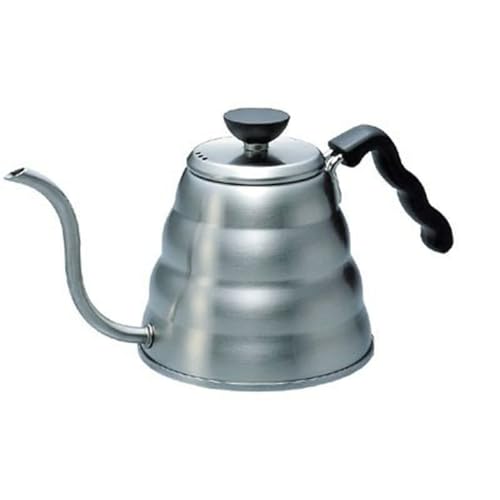
| Gooseneck kettle | Makes a slow, steady pour much easier | Yes, at first; pour slowly from a normal kettle |
 |
 |
The starter recipe
This makes one generous mug (around 250ml). Use it exactly as written for your first few brews, so you have a baseline to adjust from.
| Setting | Starting point |
|---|---|
| Coffee | 15g |
| Water | 250g (about 1:16.5) |
| Water temperature | Just off the boil (around 93–96°C); leave a boiled kettle 30 seconds |
| Grind | Medium-fine, roughly like coarse sand or table salt |
| Total brew time | 2:45 to 3:30 |
Step by step
1. Rinse the paper. Fold the seam, put the filter in the V60, and pour hot water through it. This removes the papery taste and warms the dripper and mug. Tip that water away. 2. Add the coffee and zero the scale. Give the dripper a gentle shake so the bed is flat. 3. Bloom (0:00 to 0:45). Pour about 40g of water, enough to wet all the grounds, and give it a gentle swirl. Fresh coffee will puff up and bubble as it releases gas. Skipping this is a common reason first brews taste thin. 4. First main pour (0:45 to 1:15). Pour slowly in small circles, avoiding the paper walls, until the scale reads 150g. 5. Second main pour (1:15 to 1:45). Let the level drop a little, then pour to 250g in the same slow circles. 6. Swirl and drain. Give the dripper one gentle swirl to flatten the bed, then let it drain. Aim for it to finish between 2:45 and 3:30.
When it's finished, you want a fairly flat bed of grounds, not a deep crater or grounds stuck high up the walls.
Weak or bitter? How to fix it
Taste is your main guide, and drawdown time is your second. Change one thing at a time, and grind size first, because it has the biggest effect.
| What you taste or see | Likely cause | Try this |
|---|---|---|
| Watery, thin, sour or "empty"; finishes before 2:30 | Under-extracted: grind too coarse or water too cool | Grind a little finer; use hotter water; check you used 15g, not a scoop |
| Harsh, drying, bitter aftertaste; takes over 4 minutes | Over-extracted or clogged: grind too fine | Grind a little coarser; pour more gently so you don't churn up fines |
| Strong but tastes fine, just too intense | Ratio, not extraction | Keep the grind, use 14g of coffee or add a splash of hot water |
| Sour and bitter at the same time | Uneven extraction from an inconsistent grind | Burr grinder, flat bed after the bloom, steadier pours |
If you're grinding at home, small steps matter. On a hand grinder, move a click or two at a time rather than jumping around the dial.

Three UK-specific things that trip people up
Hard water. Much of England, especially London and the South East, has hard water. It can make coffee taste flat and chalky and slowly scale your kettle. A simple jug filter usually helps, or try bottled water with low mineral content as a comparison brew to see what difference it makes.
Supermarket "filter" coffee. Pre-ground bags are fine to learn with, but they're often ground for drip machines and can run fast in a V60. If your cups are thin and fast, a slightly finer grind (or freshly ground beans) is the fix.
Very dark roasts. Dark, oily beans extract quickly and turn bitter easily. With these, use water a little cooler (around 90°C) and a slightly coarser grind.
Quick checklist for your next brew
- Weigh 15g of coffee and 250g of water, every time. - Bloom with about 40g of water for 45 seconds. - Pour slowly in two stages, finishing at 250g by 1:45. - Aim for a total time of 2:45 to 3:30. - Too weak or sour: grind finer. Too bitter or slow: grind coarser.
Once you can make the same cup twice in a row, you've cracked the hard part. From there, you can play with ratios and pour styles, but this starter recipe will make a good, balanced cup with most beans.