Much of the UK sits on hard or very hard water. That is not a coffee-shop myth — it is a plumbing fact that quietly wrecks home espresso machines. Scale builds inside boilers and pipes, slows flow, dulls flavour, and eventually kills steam performance. This guide is about understanding your postcode, choosing water that will not destroy the machine, and descaling on a realistic cadence — not about buying a new espresso machine.
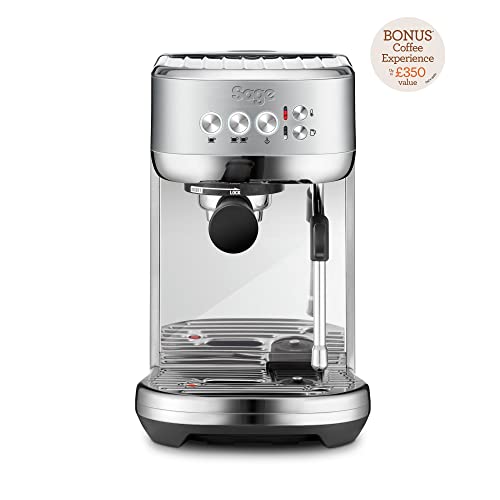
Why hard water matters for espresso
Hard water is rich in dissolved calcium and magnesium. When you heat that water under pressure — exactly what every espresso boiler does — those minerals precipitate as limescale. Scale is an insulator. It coats heating elements, narrows passages, and changes how water contacts the coffee puck.
In practice you notice it as:
- Slower flow — shots that used to finish in 25–30 seconds stretch out, even with the same grind
- Weak or sputtering steam — wand pressure drops because scale restricts the steam path
- Flat, chalky flavour — extraction becomes uneven; bright coffee tastes dull
- Temperature instability — the thermostat fights a scaled element and overshoots or undershoots
Soft water has the opposite problem in small doses: very soft or heavily demineralised water can taste hollow and, in extreme cases, is more corrosive to metals. Espresso wants a middle ground — enough minerals for extraction and taste, not enough to plate the boiler.
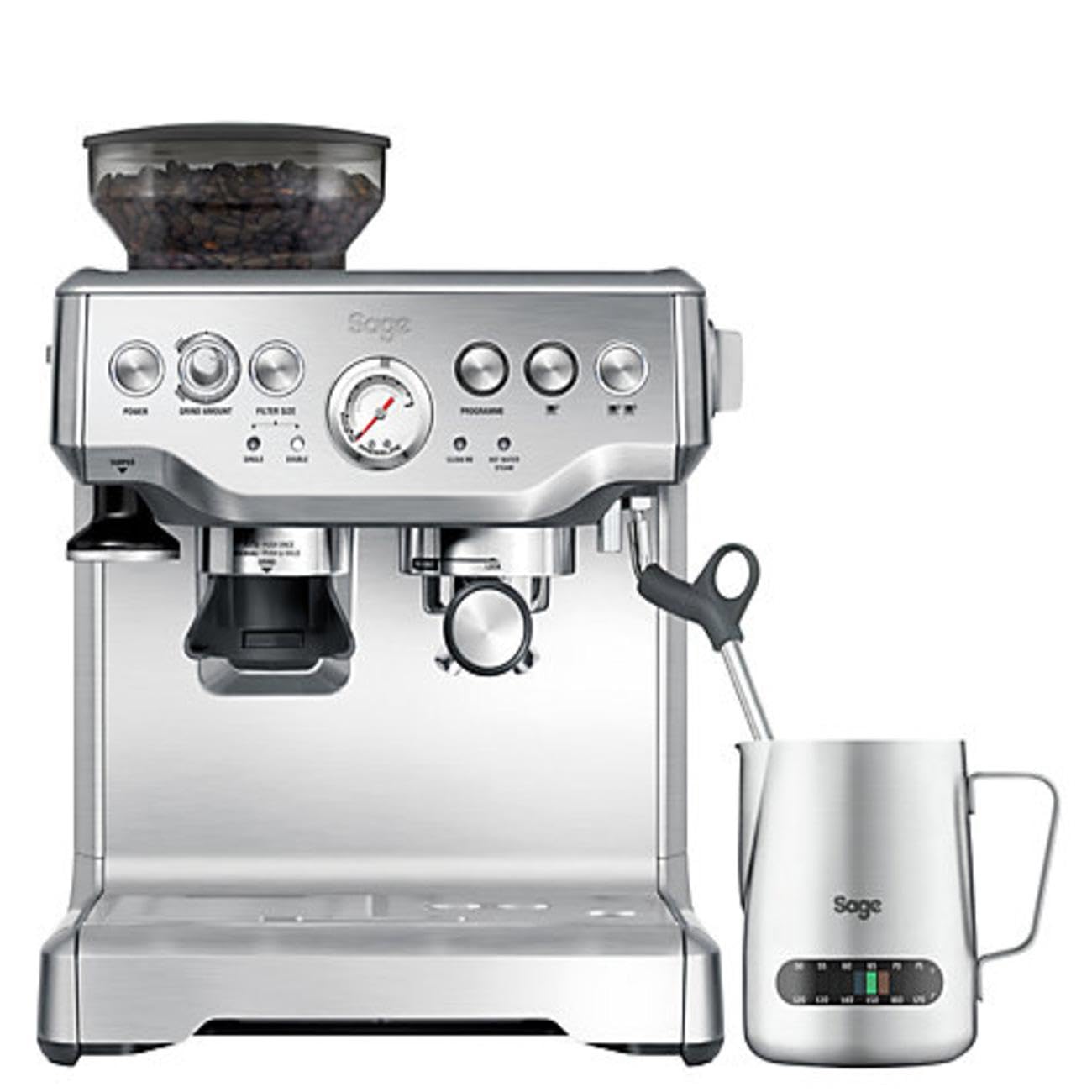
Check your UK postcode hardness
Water hardness is published by your water company and is usually listed by postcode or supply zone. Search “[your water company] water hardness” or use the company’s hardness map. Readings are often given as mg/l (ppm) calcium carbonate, or as degrees Clark (°Clark / °e).
| Rough band | Typical CaCO₃ (mg/l) | What it means for espresso |
|---|---|---|
| Soft | Under ~100 | Low scale risk; flavour can taste thin if water is almost mineral-free |
| Moderately hard | ~100–200 | Manageable with filters and sensible descaling |
| Hard | ~200–300 | Expect regular scale; filtered or bottled water is worth it |
| Very hard | Over ~300 | Common across much of the South East and East; treat water as a first-class part of the setup |
Large parts of London, the South East, East Anglia and the Midlands are hard or very hard. Soft water is more common in the North West, parts of Scotland and Wales, and some upland areas — but always check your own zone rather than assuming from the region name.
A cheap TDS (total dissolved solids) meter is a useful secondary check on the water that actually goes into the tank. It does not separate “good” minerals from “bad” ones, but a stable reading helps you spot when a filter cartridge is exhausted.
Filter, bottled, or straight from the tap?
There is no single right answer. The trade-offs are practical.
| Option | Pros | Cons |
|---|---|---|
| Tap water, unfiltered | Free, convenient | In hard areas, the fastest route to scale and warranty arguments |
| Jug / in-tank filter | Cheap daily habit; reduces hardness and chlorine taste | Cartridges expire; softens rather than eliminates minerals — still descale |
| Under-sink / plumbed softener | Best long-term control for plumbed machines | Upfront cost; over-softening can hurt taste if set too aggressively |
| Bottled low-mineral water | Predictable; easy for tank machines in hard-water flats | Cost and plastic; check the label — “mineral water” is often too hard |
| Recipe water (minerals + RO/distilled) | Most control over taste and scale | Fiddly for daily home use; easy to get wrong if you skip measuring |
Practical rule for most UK tank machines: if your zone is hard or very hard, do not run raw tap water. A jug filter changed on schedule, or a consistent bottled water with modest mineral content (roughly 50–150 mg/l TDS is a sensible home target for many people), will slow scale dramatically. Read the bottle: high-calcium “mineral” waters are the opposite of what you want.
Never run pure distilled or reverse-osmosis water with zero minerals long-term. Taste suffers, and some manufacturers warn against it because very pure water is more aggressive toward metals and can confuse hardness sensors on machines that have them.
Descaling cadence for home machines
Manufacturer manuals often say “every X months” or “when the light comes on”. Those intervals assume average water. In a hard-water UK kitchen, treat the light as a late warning, not the first cue.
A workable home rhythm:
- Soft water + filter: descale every 3–6 months, or sooner if flow slows
- Hard water + filter or bottled: every 1–3 months depending on shot volume
- Very hard tap water, no treatment: you will be descaling constantly — fix the water instead
Watch the machine more than the calendar. Longer shot times at the same grind, quieter or weaker steam, and white crust around the group or tank are all early signals.
When you do descale:
- Use a descaler the manufacturer accepts (citric or sulphamic formulas are common; check the manual)
- Follow the machine’s descale cycle end-to-end — half-rinsing leaves acid in the boiler
- Flush thoroughly with clean water afterwards; residual descaler tastes foul and is not something you want in milk drinks
- Backflush (on machines that support it) and wipe the steam wand as separate habits — descaling is not the same as cleaning coffee oils
Descaling dissolves mineral scale. It does not replace daily wipe-downs, periodic group cleaning, or changing a spent water filter.
Warranty, sensors, and when to worry
Most espresso warranties exclude damage from limescale or from using the “wrong” water. That is not fine print for show. If a boiler fails and the service centre finds heavy scale, claims are often rejected — especially on machines sold into hard-water markets like the UK.
Things worth knowing:
- Keep proof of water care — filter purchase dates, bottled water habit, or a softener service record help if a claim is disputed
- Hardness / descale lights on Sage and similar machines are useful, but they estimate from usage and sometimes from a water test strip — they are not a lab analysis of your postcode
- Do not ignore a descale alert for months in a hard-water area; the alert exists because scale damage is expensive
- If flow collapses suddenly, stop using the machine and descale (or get it serviced) before you burn out a pump fighting a blocked path
If you are buying a second-hand machine from a hard-water region, budget for a professional descale or strip-down. External shininess says nothing about the boiler interior.
What “good” espresso water roughly looks like
Speciality coffee associations publish target ranges for brew water. You do not need a lab kit at home, but the idea is useful: enough bicarbonate and minerals for balanced extraction, not so much calcium that the boiler becomes a chalk quarry.
For everyday UK home use, aim for water that:
- Is not heavily chlorinated-tasting (filters help here even in softer areas)
- Does not leave heavy white crust on a kettle in a week
- Sits in a moderate TDS band rather than “mineral water” levels or pure zero
If your filtered or bottled water tastes clean and your descaling interval stays predictable, you are close enough. Chasing perfect lab numbers matters more in cafés than in a one-group kitchen machine.
Tank habits that reduce scale between descales
Small habits matter more than expensive accessories:
- Do not leave a full tank sitting for days of unused water in a warm kitchen — empty or refresh if you travel
- Rinse the tank when you refill; biofilm and mineral rings form at the waterline
- Change filter cartridges on time — an exhausted cartridge is just a plastic bypass
- Use the steam wand every session you make milk drinks, then purge and wipe; scale plus milk residue is a worse blockage than scale alone
These will not replace descaling in Birmingham or Kent, but they stretch the gap between services and keep shot quality steadier.
A simple UK home checklist
- Look up hardness for your postcode supply zone
- If hard or very hard, pick a water strategy (filter jug, acceptable bottled, or softener) and stick to it
- Put descaling on a calendar that matches your hardness and shot volume — not only the dashboard light
- Treat steam-wand wipe-downs and group hygiene as daily/weekly jobs separate from descaling
- Read the warranty water clause once, while the machine is still new
Hard water does not mean you cannot make excellent espresso at home in the UK. It means water is part of the technique, the same way dose and grind are. Sort the water early and the machine stays quieter, hotter, and more consistent for longer — which is the boring, useful outcome most home baristas actually want.