
Most entry-level espresso machines arrive with a pressurised (dual-wall) basket. It is not a gimmick — it is a deliberate training wheel that forgives uneven grinds and light tamping. The question is not whether pressurised baskets are “bad”; it is when you have outgrown them and what you need before you switch.
This guide is for UK home baristas on machines like the Gaggia Classic Evo Pro, De’Longhi Dedica, or Sage Bambino-style setups: what pressurised baskets actually do, the signs you are ready to graduate, and the checklist that makes a single-wall basket worth the learning curve.
What a pressurised basket actually does
A pressurised basket has a second wall (or a single tiny exit hole) that creates artificial back-pressure. Your pump still pushes water through the puck, but the basket itself restricts flow so you get a thicker-looking stream and some crema even when the grind is too coarse or the dose is uneven.
That is useful when:
- You are using pre-ground supermarket coffee (often too coarse for real espresso).
- Your grinder cannot hold a fine, consistent espresso setting yet.
- You are still learning dose, distribution and tamp.
It also hides problems. Channeling, under-extraction and a weak grinder can all look “fine” in the cup because the basket is compensating. Once you care about tasting origin, roast and dial-in changes, that compensation becomes a ceiling.
| Basket type | How it works | Best for |
|---|---|---|
| Pressurised / dual-wall | Extra restriction builds pressure for you | Pre-ground, beginner routines, forgiving daily drinks |
| Non-pressurised / single-wall | Puck alone resists the pump | Fresh beans + capable grinder; tasting real dial-in |
Signs you are ready to graduate
You do not need a café mentor to spot the shift. These are practical home signals:
- You already own (or are buying) a grinder that can go fine and stay consistent. Blade grinders and most cheap whirring mills will not reward a single-wall basket.
- You are buying fresh whole beans with a roast date and finishing bags in a few weeks — pressurised baskets paper over stale pre-ground more than they unlock specialty.
- Your shots with the pressurised basket taste flat or samey no matter how you tweak dose or grind — the basket is capping flavour clarity.
- You want feedback. On a single-wall basket, a 15-second gush or a 45-second choke tells you something useful. Pressurised baskets mute that feedback.
- You are willing to weigh dose and yield for a fortnight. Graduation without a scale is possible but slower and more frustrating.
If three or more of those apply, it is time. If you still rely on pre-ground or a basic blade mill, stay pressurised a bit longer — switching early just creates bitter, watery disappointment.
What you need before you swap
| Requirement | Why it matters | Minimum bar |
|---|---|---|
| Espresso-capable grinder | Single-wall needs a fine, even particle size | Stepped or stepless burrs that reach espresso; not blades |
| Correct basket size | 58 mm vs 51/54 mm portafilters are not interchangeable | Match your machine (e.g. Classic Evo Pro = 58 mm) |
| Fresh whole beans | Stale beans channel and taste hollow | Roast-dated bags you will finish in ~2–4 weeks |
| Scale (strongly recommended) | Dose in / yield out is how you dial | 0.1 g resolution is enough |
| Basic distribution habit | Clumps and tilted tamps cause channels | WDT or careful finger level + level tamp |
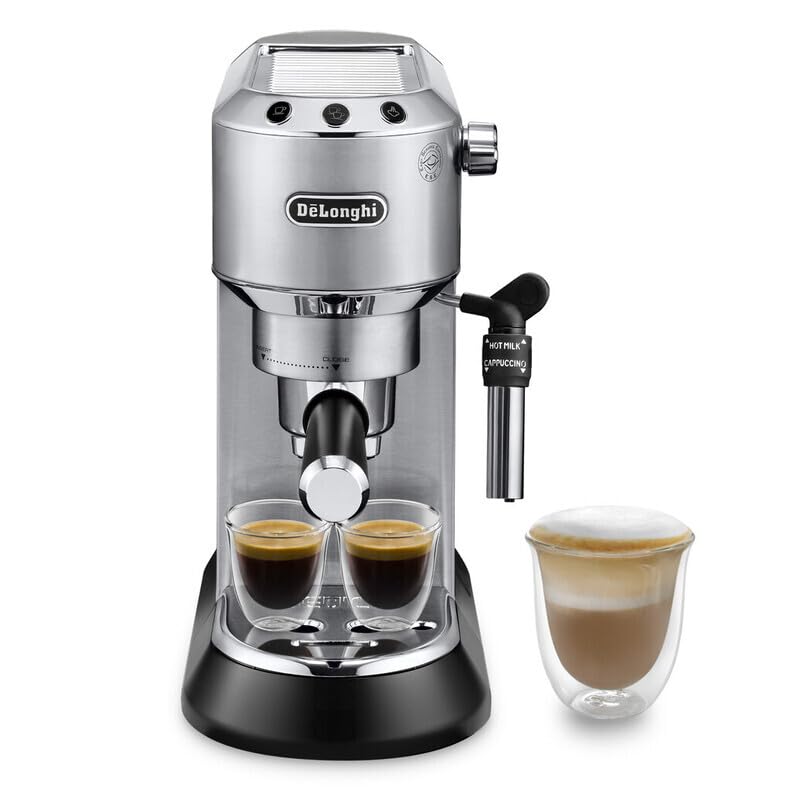
Machines that already ship with both basket styles — the Gaggia Classic Evo Pro is a common UK example — make the swap cheap: you are using hardware you already own. Slim pressurised-only machines like many Dedica kits may need a compatible single-wall basket bought separately; check diameter before you order.
How to make the first week less painful
Expect a few messy shots. That is normal.
- Start finer than you think. If the shot races through under ~20 seconds for a typical double, grind finer before you blame the machine.
- Pick a target recipe and stick to it for a few days — for example ~18 g in / ~36 g out in about 25–32 seconds as a learning scaffold (adjust to your basket size and taste).
- Change one variable at a time — grind first, then dose, then yield.
- Watch the stream, not just the clock: a pale gush or sideways jet usually means distribution or grind, not a broken boiler.
- Keep the pressurised basket in the drawer. Guests, pre-ground emergencies, or a broken grinder day are valid reasons to swap back temporarily — graduation is not a loyalty test.
When staying pressurised is the honest choice
There is no shame in dual-wall if it matches your setup. Stay pressurised if you mainly drink milk drinks from supermarket ground coffee, you do not want a grinder upgrade yet, or you value a reliable weekday flat white over tasting notes. A good pressurised routine beats a poorly dialled single-wall shot every morning of the week.
Graduate when you want the machine and grinder to tell you the truth about the beans. That is the real step up — not a more expensive portafilter for its own sake.
Quick checklist
- Pressurised baskets forgive grind and tamp; single-wall baskets reward them.
- Graduate when you have a capable burr grinder, fresh beans, and the patience to dial in.
- Match basket diameter to your portafilter; use the single-wall that came with machines like the Classic Evo Pro when you can.
- Weigh dose and yield for the first fortnight; change one variable at a time.
- Keep the pressurised basket for travel, guests, or pre-ground days — switching is reversible.
Once the single-wall basket is dialled, small grind changes start tasting like real adjustments again — which is exactly when home espresso gets interesting.